
AI Implementation for Small Businesses: Where Do You Actually Start?
For many small businesses, the challenge is not whether AI matters. It is knowing where to begin without wasting time, creating risk, or adding more t...


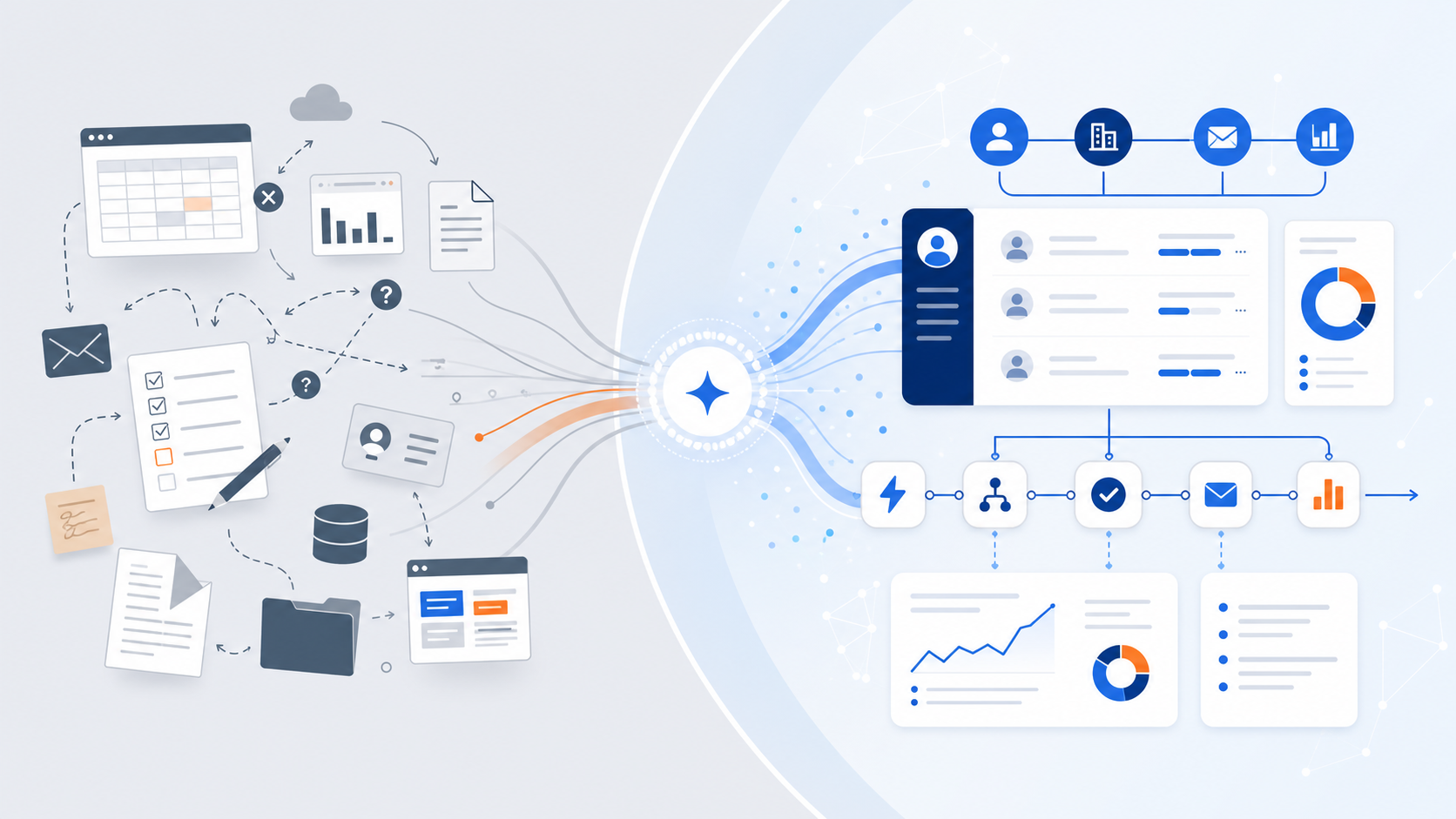
Artificial intelligence has moved from trend to practical business conversation. For many growing companies, the question is no longer whether AI matters. The real question is whether the business is ready to implement AI in a way that improves operations, supports teams, and creates measurable value.
That is an important distinction. A business can be interested in AI without being ready to use it well. It can purchase tools, test prompts, and experiment with automation without having the workflows, systems, and process clarity needed to make those efforts worthwhile.
At Primo Coding, we see many businesses approaching AI from the same position. They know there is opportunity, but they are not sure where to start, what to prioritize, or how to connect AI to the systems they already use. The goal should not be to force AI into every part of the business. The goal should be to identify where AI makes sense, where it can reduce friction, and where it can support better execution.
If you are asking whether your business is ready for AI, the answer is usually not a simple yes or no. It depends on operational readiness, system maturity, and implementation planning. Here is how to evaluate where your business stands.
One of the most common mistakes businesses make is assuming AI readiness begins with choosing software. In reality, readiness begins with understanding how work happens today.
If your team is already dealing with inconsistent processes, incomplete data, unclear ownership, or disconnected systems, AI will not automatically solve those issues. In many cases, it will surface them faster. That is why AI implementation should start with process clarity, not platform excitement.
AI works best when it supports workflows that already have a defined purpose and structure. When the underlying process is clear, the data is accessible, and the outcome is known, AI can help teams move faster and reduce repetitive work. When those foundations are missing, businesses often end up adding complexity instead of improving performance.
A more useful question than “Which AI tool should we buy?” is “Where are we losing time, consistency, or visibility today?”
If your business is exploring practical next steps, our free AI Readiness Assessment can help you evaluate your current foundation, identify priority gaps, and determine the right next step.
Most businesses do not need perfect systems before they begin. They do, however, need enough structure to identify practical use cases and support implementation. Here are several signs your business may be ready for AI.
AI is often most effective when applied to repeatable, time-consuming tasks. That can include lead qualification, follow-up workflows, note summarization, service routing, content support, or internal documentation.
If your team regularly spends time on manual work that follows a pattern, there may be a strong opportunity for AI workflow automation. The key is that the process already exists. AI should support a real workflow, not replace the need for one.
Businesses with a CRM, automation platform, service system, or documented operating process are often in a better position to implement AI successfully. Existing systems create the structure AI needs.
For companies using HubSpot, this is especially important. CRM data, automation, reporting, and lifecycle visibility create a strong foundation for AI implementation. Instead of implementing AI in isolation, businesses can connect it to sales, marketing, service, and operational workflows that already matter.
AI projects perform better when the business has a clear outcome in mind. That might mean reducing response time, improving lead follow-up, standardizing internal processes, improving customer service support, or creating better reporting visibility.
If your business is evaluating AI based on a defined operational goal rather than general curiosity, you are much closer to readiness. Clear goals make it easier to prioritize use cases and avoid paying for tools that do not support real business needs.
AI implementation is not just a technology project. It is often a workflow improvement project. Teams may need to refine how tasks move, where information is stored, how handoffs happen, and where oversight belongs.
If your team is open to improving current processes and adopting a more structured approach, implementation tends to go much more smoothly. Businesses that expect AI to improve results without changing anything operationally often struggle to see return.
Not every business should move straight into AI implementation. In some cases, the best next step is an AI readiness assessment before any buildout begins.
Here are a few signs preparation should come first.
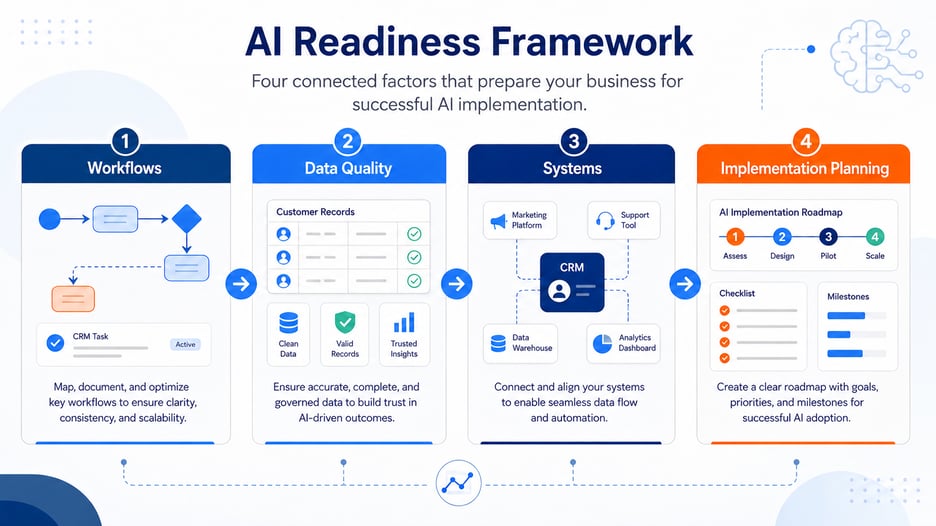
AI-supported workflows depend on usable data. If your CRM includes duplicate records, outdated contact details, inconsistent field usage, or missing lifecycle information, that creates risk. Poor data quality can weaken automation, reporting, segmentation, and decision-making.
Before implementing AI in customer-facing or operational workflows, it is often worth improving how data is cleaned, organized, and maintained.
If the team cannot explain how a process currently works, it becomes difficult to improve it with AI. Undefined ownership, inconsistent handoffs, and process variability make implementation harder and outcomes less predictable.
A workflow does not need to be overly formal, but it should be clear enough to map, evaluate, and refine.
Many growing businesses use multiple systems across sales, marketing, service, and operations. If those tools are disconnected, AI may create another layer of complexity instead of reducing it.
A strong implementation plan should account for the systems already in place. In many cases, the better path is to improve integrations, data flow, or process alignment before introducing new AI-supported workflows.
When businesses start with a platform instead of a practical problem, they usually struggle to measure success. The strongest starting point is usually a focused use case with a clear benefit, such as faster follow-up, less manual routing, better meeting summaries, or stronger internal knowledge management.
The use case should shape the solution, not the other way around.
A business that is ready for AI usually has a few important pieces in place:
That does not mean every process is mature or every system is perfect. It means the business has enough clarity to choose a practical starting point.
For many growing companies, AI readiness is not about a full-scale transformation. It is about choosing one meaningful workflow, aligning the supporting systems, and implementing a solution that improves consistency and saves time.
If your business already uses HubSpot, you may be better positioned than you think.
HubSpot gives teams a central place to manage CRM data, automate actions, support customer-facing workflows, and report on performance across the business. That makes it a strong environment for AI implementation because the work is already connected to real systems and real business processes.
Instead of treating AI as a standalone initiative, businesses can evaluate how it fits into lead qualification, follow-up processes, service support, internal knowledge workflows, reporting support, and CRM organization. That creates a more structured implementation path and a stronger connection between AI activity and business outcomes.
This is also where planning matters. AI recommendations should align with how your CRM, automation, and reporting already function. Otherwise, implementation can create confusion instead of clarity.
The businesses that gain the most value from AI are usually not the ones moving fastest without structure. They are the ones taking a practical, systems-focused approach.
That means assessing current workflows, identifying the use cases most likely to create value, prioritizing what should happen first, and building a plan that supports adoption over time. It also means avoiding unnecessary tools and focusing on implementation that fits the business as it operates today.
At Primo Coding, we help businesses take that structured path. Our team provides Expert Help across HubSpot development, onboarding, implementation, and workflow improvement so AI initiatives are connected to real systems and real business processes. As Certified Experts, we focus on practical execution, clearer workflows, and solutions that are Done Right, The First Time.
If your business has repeatable processes, defined goals, and systems that already support your operations, the answer may be yes. If your team is still dealing with unclear workflows, disconnected tools, or unreliable data, the answer may be not yet, but with the right preparation, it can be.
The important thing is not to guess. It is to evaluate your readiness honestly and choose a starting point that supports measurable value.
Not sure where your business stands? Complete Primo Coding’s free AI Readiness Assessment to evaluate your goals, processes, data, technology, and team—and receive practical next steps based on your results.

For many small businesses, the challenge is not whether AI matters. It is knowing where to begin without wasting time, creating risk, or adding more t...